
Lung Cancer Surgery
Lung cancer is a dangerous form of cancer which is typically caused by tobacco smoking. It is commonly divided in small-cell and non-small-cell carcinomas. There are surgical options available in order to cure patients.
Non-Small-Cell Lung Cancer Surgery
When dealing with non-small-cell carcinomas there is a possibility for a cure using medical procedures if the cancer is detected early on. The type of operation that can be performed will vary depending on a few factors: the size and location of the tumour, the wellness of the lungs, the patient’s general state of health and whether the tumour has spread to nearby tissue or not.
A wedge resection is the safest lung cancer surgery procedure available. It can be performed if the disease is detected early on. The operation involves removing the portion of the lung with the tumour along with some surrounding tissue. However, this lung cancer surgery carries a higher risk of the cancer returning than the other ones.
The most common procedure is a lobectomy, which involves removing one of the lung’s lobes. The right lung has three lobes and the left one has two. A bilobectomy can also be performed, which removes two lobes.
A pneumonectomy is done when the tumour is too large for the other procedures or when it is situated in a central part of the lung. Using this method an entire lung is removed surgically, which can drastically decrease lung function. However, there are patients that had good lung function beforehand that can tolerate the absence of the organ quite well.
Small-Cell Lung Cancer Surgery
Surgical options are not generally used in these cases. However, there are exceptions when an operation can benefit the patient. This is followed by sessions of chemotherapy and radiation therapy. Pneumonectomy, wedge resection and lobectomy are also available in these cases, while lobectomy remains the preferred method if possible. Sleeve resection is another procedure that involves removing a section of a large airway and reattaching the lung.
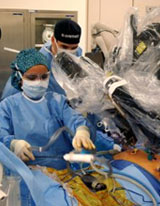
Video-assisted thoracic surgery or VATS, for short, is a new kind of surgery that can be done on some people with early stage lung cancer. It is a complicated operation that requires a great deal of skill. First, a tiny camera is put through a small hole in the chest to help the surgeon see the tumour. Then additional small holes are made in the skin, and long instruments are passed though these holes in order to remove the tumour. Only small cuts (incisions) are needed, so there is a shorter hospital stay and less pain after surgery. This approach is most often used for smaller tumours situated near the outside of the lung.
There are options that treat the symptoms of the cancer, instead of trying to remove it. Using a laser can clear airway blockages that can cause pneumonia or shortness of breath. Tubes can be placed in airways to help keep them open. They can also be used to drain out the fluid that can collect in the chest and make it difficult to breathe.
Any of the mentioned medical lung cancer surgery procedures carry risks. There can be serious side effects such as pneumonia, infection and bleeding. However, if the patient was in good shape before the surgery then he should make a full recovery and be able to return to his normal activities.