
Screening for Cancer Surgery
Most cancers have no cure and this fact has shifted the emphasis in cancer management worldwide to prevention strategies. Most cancers respond better to treatment if they are detected early, hence the emphasis on screening for cancer surgery. Screening means testing otherwise healthy individuals in an attempt to detect early symptoms of cancer and treat it before it has grown and possibly spread to other parts of the body.
Who Needs to be Screened for Cancer?
Some individuals are at a higher risk of developing certain cancers than others. Smokers for example are at a higher risk of developing lung cancer than non-smokers. Some other individuals may be prone to certain cancers because of a genetic defect. But some cancers are so prevalent that anybody is at risk of developing them. Breast cancer is one of these. Almost all women are at risk of developing breast cancer at some point in their lives and breast cancer screening is by and large mandatory for women of any age group. Even so, some women, because of a genetic predisposition, are at higher risk of developing breast cancer than the average population and may need more screening.
If there has been a strong incidence of a cancer in your family then it would be safe to assume that you’re at a very high risk of developing the cancer. Screening in this case could help by detecting the cancer early on before it has taken root and spread throughout your body.
Clinical versus Self-Diagnosis
For some very common cancers testing kits for use at home have been developed which you can use to screen yourself for these cancers. These screening tests work by detecting tell-tale chemicals in your body fluids for example. Some of these screening tests are good enough to detect cancer at a very early stage, although it is recommended to follow them up with a clinical test done in a full-fledged testing laboratory.
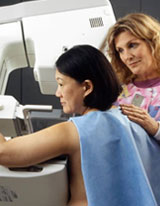
For some cancers (breast cancer is again an example) a physical inspection may be enough to detect the presence of a tumour, except that by this time the cancer would be at a fairly advanced stage and require a robust intervention procedure such as surgery. Clinical screening will usually be done with the aid of technologies that are guaranteed to detect the tumours at a very early stage of formation. In the case of breast cancer for example mammographic screening uses x-rays to examine the breast and it will usually detect any uncharacteristic growths (or lumps) that are still too small to feel by hand.
For women at a higher than normal risk of suffering from breast cancer the mammographic screening option is therefore to be preferred, and it should be done at an early age, maybe even supplemented with genetic screening to test for certain genes (called BRCA genes) that are known to predispose women to this type of cancer.
Almost anybody is at risk of developing some cancer or other at some point in their lives. With cancer the old adage is all so true: prevention is better than cure. If you have any reason to suspect that you are at risk of developing a cancer then you should have screening for cancer surgery.